
Understanding the Bag Valve Mask in Emergency Care
In emergency medicine, few tools are as immediately recognizable and life-saving as the bag valve mask. Picture an emergency responder arriving at the scene of a sudden cardiac arrest, quickly assessing the patient, and delivering breaths with a BVM while high-quality CPR is started. This simple but powerful device bridges the gap between spontaneous breathing and advanced airway support. For both healthcare providers and trained lay rescuers, understanding what a bag valve mask is and how it works can make a lifesaving difference when seconds matter.
What is a Bag Valve Mask? (Core Definition)
A bag valve mask is a handheld resuscitation device used to provide positive pressure ventilation to a person who is not breathing adequately or has stopped breathing altogether. It is a staple in emergency response, hospital care, and critical transport situations. The device consists of a self-inflating bag, a one-way valve, and a clear face mask designed to fit securely over the patient’s mouth and nose. When the bag is squeezed, air is pushed into the lungs; when released, it refills automatically. Because it does not require electricity or compressed oxygen to function, the BVM remains one of the most reliable tools in situations where advanced ventilation equipment is not immediately available.
Understanding the components of a BVM helps users apply it with greater confidence. The bag itself is typically made of silicone or rubber and comes in adult, pediatric, and infant sizes. The attached valve ensures that airflow moves in the correct direction, preventing exhaled air from reentering the bag. The mask forms a seal to deliver effective ventilation and allows rescuers to observe the patient’s response. Many BVMs can also be connected to oxygen supplies, increasing the oxygen concentration delivered with each breath. Together, these parts make the BVM versatile enough for use in basic life support as well as advanced life support environments.
What is a Bag Valve Mask Used For?
A bag valve mask is most commonly used during respiratory arrest, cardiopulmonary resuscitation, or severe respiratory distress. Emergency medical technicians rely on BVMs when responding to cardiac arrest because maintaining adequate oxygenation is crucial for survival. In hospitals, clinicians use BVMs during airway management, procedural sedation, or patient transfers when other ventilation methods are temporarily unavailable. These devices are also essential during trauma care, drug overdose cases, and severe asthma or anaphylaxis emergencies where breathing becomes compromised. Essentially, whenever a patient cannot breathe on their own, the BVM becomes a frontline tool for preserving brain and organ function.
What is the Difference Between a Bag Valve Mask and an Ambu Bag?
People often encounter the term Ambu bag and wonder whether it differs from a bag valve mask. In reality, the words are used interchangeably. Ambu is a brand name that became widely popular, similar to how adhesive bandages are often called Band Aids. The original Ambu bag was introduced in the 1950s and reshaped emergency care by replacing earlier, more cumbersome devices. Although Ambu is simply a manufacturer, the term has stuck in everyday language. Functionally, Ambu bags and BVMs perform the same task and operate the same way. What healthcare providers should remember is that, regardless of brand, proper technique determines whether ventilation is effective.
What is the Correct Technique for Using a Bag Valve Mask?
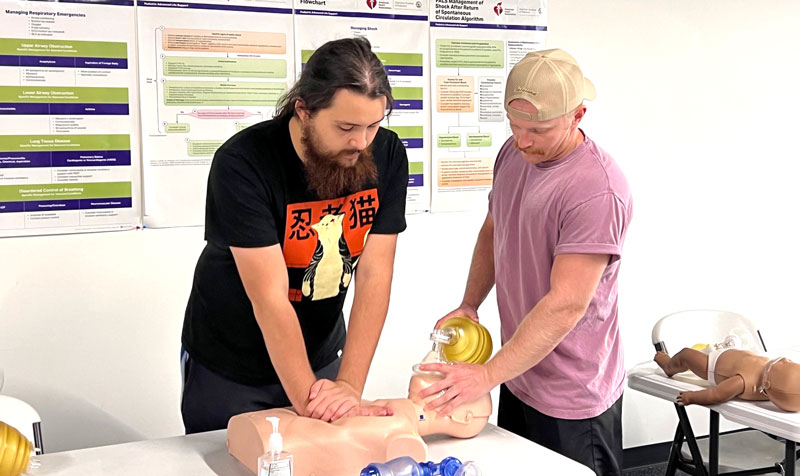
Mastering the correct bag valve mask technique is critical, as improper use can result in poor ventilation or even harm. Before using a BVM, responders must prepare by checking for proper assembly, assessing the patient’s airway, and positioning the head correctly. The one-person E-C clamp technique is commonly taught and involves forming a seal with the mask using one hand while squeezing the bag with the other. The thumb and index finger create a C shape on the mask, while the remaining fingers lift the jaw in an E shape to maintain an open airway. For patients without suspected spinal injuries, the head tilt chin lift method improves airflow; for trauma patients, a jaw thrust is preferred. Ventilations should be slow and controlled, about one breath every five to six seconds for adults and slightly faster for children.
In many situations, the two-person BVM technique delivers better results because one rescuer focuses solely on maintaining the mask seal while the other squeezes the bag. This approach reduces air leakage and decreases the risk of gastric inflation. During CPR, the BVM must be synchronized with chest compressions to maintain the recommended ratio in basic life support or support continuous compressions in advanced life support settings. Troubleshooting is also an essential skill, as rescuers must quickly identify issues like a poor mask seal, blocked airway, inadequate chest rise, or malfunctioning equipment.
Best Practices and Safety Considerations
Best practices and safety considerations ensure that BVM use remains both effective and safe. Infection control is vital, as BVMs involve close contact with the patient’s airway; providers use gloves, masks, and filters to reduce exposure risks. Monitoring patient response is crucial, with rescuers watching for chest rise, changes in skin color, and improvements in oxygenation. Special populations, such as infants and pregnant women, require adjustments in technique and positioning to avoid complications. Accurate documentation supports continuity of care, while clear communication within the response team ensures that everyone understands their roles.
Training and Certification Requirements
Training and certification are essential for anyone expected to use a bag valve mask. Healthcare providers learn BVM ventilation through CPR, Basic Life Support, Advanced Cardiovascular Life Support, and Pediatric Advanced Life Support courses. Hands-on practice builds muscle memory and prepares rescuers for real emergencies. Common mistakes like inadequate mask seal, excessive ventilation volume, incorrect head positioning, or delayed problem recognition can be avoided with repeated practice and expert instruction.
FAQs About Bag Valve Masks
- How do you properly position a bag valve mask on a patient? Place the mask over the patient’s nose and mouth, creating an airtight seal. Use the “C-E” technique: form a “C” with your thumb and index finger around the mask’s connector while your remaining three fingers form an “E” along the patient’s jawline. Tilt the head back slightly (unless spinal injury is suspected) to open the airway, and ensure the mask covers from the bridge of the nose to below the lower lip.
- When should a bag valve mask be used instead of mouth-to-mouth rescue breathing? A bag valve mask should be used whenever available during cardiac arrest or respiratory failure. It’s preferred over mouth-to-mouth because it delivers higher oxygen concentrations (up to 100% with supplemental oxygen), provides better infection control, and allows more consistent ventilation volumes. Healthcare providers and trained first responders typically use BVMs as their primary ventilation method.
- Can one person effectively operate a bag valve mask alone? While possible, a one-person BVM operation is challenging because you must simultaneously maintain an airway seal, position the head properly, and squeeze the bag. Two-person technique is more effective: one rescuer maintains the mask seal and airway positioning while the second squeezes the bag. If working alone, consider using an oral or nasal airway adjunct to help maintain airway patency.
Conclusion and Call to Action
The bag valve mask remains one of the most vital tools in emergency respiratory care, bridging the gap between basic life support and advanced airway management. Proper BVM technique requires hands-on practice, correct positioning, and an understanding of when and how to use this device effectively. Whether you’re a healthcare professional maintaining your skills or someone seeking to prepare for emergencies, mastering BVM use is a fundamental component of quality emergency care.
Ready to learn life-saving skills with confidence? CPR Nashville, an American Heart Association training site, offers comprehensive BLS classes in Nashville where you’ll gain hands-on experience with bag valve masks and other critical emergency equipment. Our stress-free, practical courses cover BLS for Healthcare Providers, ACLS, PALS, and CPR and First Aid certifications. Whether you need initial certification or renewal, our expert instructors ensure you’re prepared for real-world emergencies. Don’t wait to make a difference—enroll in your CPR certification in Nashville today and join the community of trained responders ready to save lives.