
Every year, more than 350,000 cardiac arrests occur outside of hospital settings in the United States, according to the American Heart Association. In the vast majority of those cases, a bystander is present, but fewer than half of cardiac arrest victims receive CPR before emergency services arrive. Immediate bystander CPR can double or triple a victim’s chance of survival. So here is a question worth sitting with: if someone collapsed right in front of you on Broadway in Nashville, would you know what to do? This article breaks down what CPR certification involves, what it costs, why it matters, and where Nashville residents can get trained quickly and confidently through CPR Nashville, the city’s trusted American Heart Association training site.
What Is CPR Certification?
Cardiopulmonary Resuscitation is a hands-on emergency technique that combines chest compressions and rescue breathing to maintain blood flow and oxygen delivery when a person’s heart has stopped. CPR buys time — it keeps the brain and vital organs alive until advanced medical care arrives. Certification goes beyond simply knowing the technique. It means a provider has demonstrated competency under the guidance of a qualified instructor and has received documented, employer-recognized credentials through an accredited program.
Types of CPR Courses Offered at CPR Nashville
CPR Nashville offers a full range of American Heart Association courses designed for both healthcare professionals and members of the general public:
- BLS for Healthcare Providers — foundational certification for nurses, physicians, EMTs, paramedics, respiratory therapists, and other clinical staff
- ACLS (Advanced Cardiovascular Life Support) — advanced certification for providers managing complex cardiac and respiratory emergencies in ICUs, emergency departments, and critical care settings
- PALS (Pediatric Advanced Life Support) — specialized training for providers who care for critically ill or injured infants and children
- CPR and First Aid — a practical, accessible course for parents, teachers, coaches, caregivers, and anyone who wants to be prepared for emergencies in everyday settings
What Makes CPR Nashville Different?
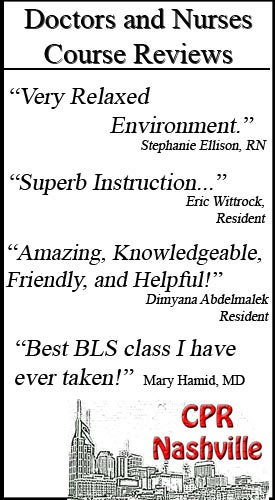
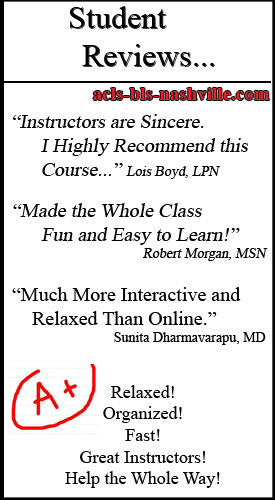
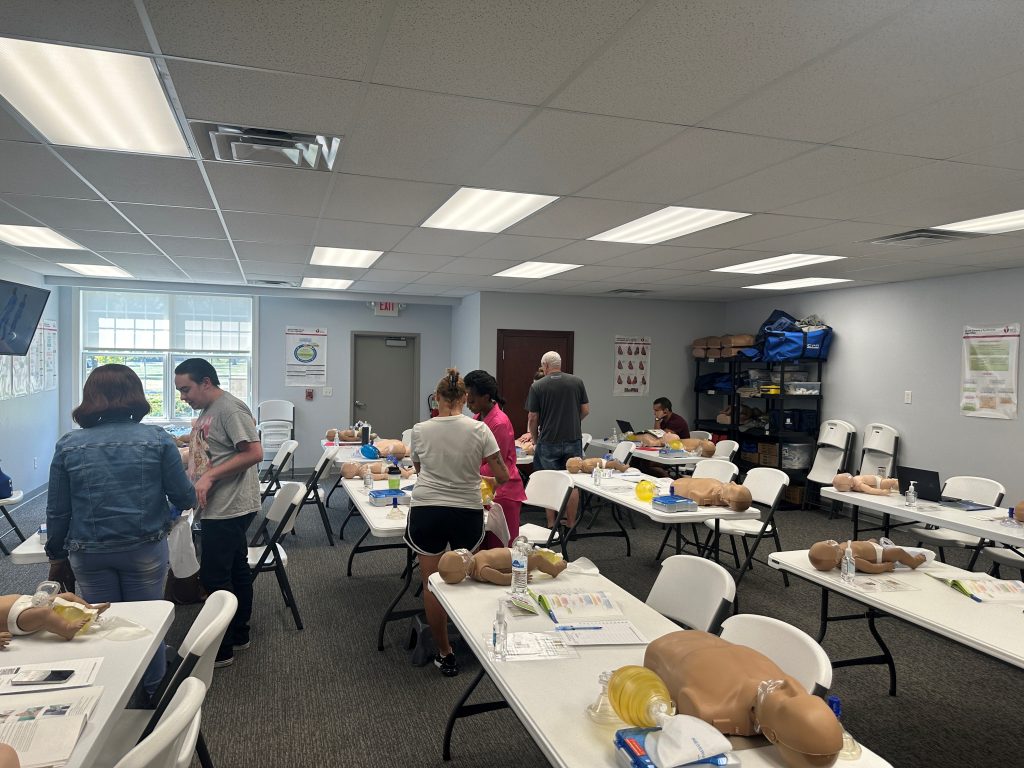
CPR Nashville is an authorized American Heart Association training site, which means every course is delivered using the current AHA curriculum and produces nationally recognized credentials. Class sizes are kept small to ensure each participant receives individualized attention and sufficient hands-on practice. Flexible scheduling options — including weekday, evening, and weekend classes — make it practical for busy Nashville residents to get certified without disrupting work or family commitments. The learning environment is intentionally stress-free and beginner-friendly, with no prior experience required.
How Much Does It Cost to Get CPR Certified in Nashville?
General Price Range in Nashville
CPR certification costs in Nashville vary based on course type and provider. Community-level CPR and First Aid courses typically fall in the $75–$100 range, while clinical certifications such as BLS are priced around $80. Advanced courses, including ACLS and PALS, generally range from $200–$300, reflecting the depth of content and extended course format. Online-only courses may appear less expensive, but they lack the hands-on skills component required by most hospitals, employers, and licensing boards — making them insufficient for professional certification purposes.
What’s Included in the Cost?
CPR Nashville’s course fees cover the complete training experience. Participants receive AHA course materials aligned with current resuscitation guidelines, full access to hands-on manikin practice and AED trainer equipment, and instructor-led guidance throughout the session. Upon successful completion, an AHA certification card is issued — valid for two years and accepted by employers and credentialing organizations nationwide. There are no hidden fees and no additional costs for materials.
Group and corporate discounts may be available for teams or organizations certifying multiple individuals at once. Businesses, hospital departments, schools, and community organizations can inquire about on-site training options that bring the course directly to their location.
Is It Worth the Investment?
The cost of CPR certification is modest when measured against what it provides. A BLS course costs around $80 — roughly the price of a dinner out — and produces a credential that is valid for two years, required for most healthcare employment, and capable of making the difference between a bystander freezing and a bystander saving a life. For healthcare professionals, maintaining current certification is a non-negotiable employment requirement. For parents, teachers, and community members, the value is measured in confidence and preparedness. No financial calculation is needed when the outcome is a life saved.
Is Being CPR Certified Useful?
The Life-Saving Reality
Cardiac arrest does not happen only in hospitals. It happens at home, at the gym, at a restaurant on Lower Broadway, at a youth soccer game, and in office break rooms. According to the AHA, approximately 70 percent of out-of-hospital cardiac arrests occur in the home — meaning the most likely person to witness a cardiac arrest is a family member, not a medical professional. CPR administered within the first two minutes of cardiac arrest dramatically improves the odds of survival and neurologically intact recovery. Certification ensures that when the moment comes, a trained person is ready to act rather than be paralyzed by uncertainty.
Professional Benefits of CPR Certification
CPR certification is a required or strongly preferred credential across a wide range of industries in Nashville:
- Healthcare — BLS, ACLS, and PALS are standard credentialing requirements for nurses, physicians, and allied health professionals
- Education — many Tennessee school districts and childcare licensing requirements include CPR certification for staff
- Fitness and personal training — most certification bodies for personal trainers require current CPR and AED credentials
- First responders — EMTs, paramedics, and firefighters maintain CPR certification as a baseline professional standard
For job seekers, current CPR certification signals preparedness and professionalism. Corporate teams with CPR-trained employees are better equipped to respond to workplace emergencies and better positioned for OSHA compliance.
Personal and Community Benefits
Beyond professional utility, CPR certification builds something harder to quantify — genuine confidence. Providers who have practiced chest compressions, AED operation, and choking response in a supported training environment arrive at real emergencies with the composure to act. That confidence is contagious. A Nashville where more residents are CPR-certified is a Nashville where cardiac arrest survival rates are higher, where workplaces are safer, and where communities are more resilient. Each certified individual represents one more person capable of bridging the gap between collapse and the arrival of emergency medical services.
What You Will Learn in a CPR Nashville Class
A CPR Nashville course is built around active skill development rather than passive observation. Participants practice and master:
- High-quality chest compressions — correct hand placement, compression depth of at least two inches, rate of 100–120 compressions per minute, and full chest recoil
- Rescue breathing and ventilation — proper technique for delivering effective breaths with a bag-mask device or rescue breathing barrier
- AED operation — powering on the device, applying pads, analyzing rhythm, and delivering a shock safely and efficiently
- Response to choking and airway obstruction — back blows and abdominal thrusts for conscious adults and children
- Scenario-based training — working through realistic emergency simulations that build muscle memory and decision-making confidence
The scenario-based component is particularly valuable. Participants do not just learn the steps — they practice them under simulated pressure, which research in emergency training consistently shows produces better retention and faster real-world response times.
Where Is the Best Place to Get CPR Certified in Nashville?
Why CPR Nashville Is the Top Choice
CPR Nashville is Nashville’s premier AHA-authorized training site, offering the widest range of AHA courses available locally. The program’s combination of credible certification, experienced instructors, small class sizes, and a genuinely welcoming environment has made it the go-to resource for both healthcare professionals and community members throughout the Nashville area. Certifications issued through CPR Nashville are recognized by hospitals, health systems, licensing boards, and employers across the country — no questions asked.
What Sets CPR Nashville Apart
CPR Nashville’s approach to training is grounded in the belief that everyone can learn to save a life. Key differentiators include:
- Truly hands-on training — not video-only or online-only, but active skill practice with proper equipment
- Convenient Nashville location with class times that accommodate diverse schedules
- Quick certification turnaround — most courses are completed in a single session of a few hours
- Friendly, AHA-certified instructors who adjust their approach to each participant’s comfort level and experience
Who Should Train at CPR Nashville?
CPR Nashville serves a broad and diverse training community, including healthcare professionals needing BLS, ACLS, or PALS renewal, teachers and school staff maintaining state or employer requirements, parents and family caregivers preparing for home emergencies, corporate teams building workplace safety readiness, and anyone in Nashville who wants to face an emergency with knowledge and confidence rather than uncertainty.
How to Get CPR Certified at CPR Nashville
The process is straightforward and can be completed in just a few steps:
- Visit CPR Nashville’s website and browse the full list of available AHA courses
- Choose the course that matches your professional or personal needs — BLS, ACLS, PALS, or CPR and First Aid
- Select a class date and time that works with your schedule — weekday, evening, and weekend options are available
- Complete registration and payment online — the process is quick, and confirmation is immediate
- Attend your hands-on class at CPR Nashville — arrive ready to learn in a stress-free, supportive environment
- Receive your AHA certification card the same day — valid for two years and accepted nationwide
Most courses are completed in a single session lasting a few hours. Small group sizes ensure that participants spend meaningful time at each skill station, receive direct instructor feedback, and leave with genuine competency rather than just a completed checklist.
Conclusion
CPR certification in Nashville is absolutely worth it — for healthcare professionals maintaining required credentials, for employers building safer workplaces, and for every Nashville resident who wants to be ready when an emergency strikes. The cost is low, the time investment is minimal, and the potential return is immeasurable. CPR Nashville makes the process accessible, credible, and genuinely effective through AHA-authorized training delivered by experienced instructors in a hands-on, stress-free environment. Getting certified is one of the most practical decisions a person can make, and in Nashville, there has never been a better or more convenient time to do it.
FAQs
Is CPR certification worth getting in Nashville? Yes! CPR certification equips you with life-saving skills that can make a critical difference in emergencies. Whether you’re a healthcare professional or a concerned citizen, being CPR-certified in Nashville means you’re prepared to act when it matters most.
How long does it take to get CPR certified in Nashville? At CPR Nashville, most courses are completed in just a few hours. Classes are hands-on and stress-free, making it easy to fit certification into your busy schedule — whether you’re getting your initial certification or a renewal.
Which CPR courses does CPR Nashville offer? CPR Nashville is an American Heart Association training site offering BLS for Healthcare Providers, ACLS, PALS, and CPR & First Aid courses — available for both initial certifications and renewals. All classes are taught in a supportive, hands-on environment.