
Basic Life Support is not a one-size-fits-all skill. The human body changes significantly from infancy through adulthood. These physiological differences demand distinct approaches when cardiac arrest occurs.
What is BLS?
Basic Life Support is the foundation of emergency cardiac care. It is designed to sustain life until advanced medical help arrives. However, applying the same technique across all age groups can reduce effectiveness and cause harm.
The American Heart Association maintains separate BLS protocols for adults, children, and infants. These distinctions are grounded in anatomy, physiology, and the most common causes of cardiac arrest across age groups. Understanding these differences is essential for any trained responder.
Healthcare providers, educators, and first responders must be fluent in both pediatric and adult protocols. Hesitation or misapplication during a cardiac emergency costs critical time. Knowing exactly what to do — and when — is what competent BLS training achieves.
Understanding the Age Classifications in BLS
BLS protocols divide patients into three age categories. Each category carries specific technique requirements and clinical considerations. Knowing which category applies is the first decision a rescuer must make.
The three classifications are:
- Adult — Puberty and older
- Child — Age 1 through puberty
- Infant — Under 1 year of age, excluding newborns in the delivery setting
These categories are not purely based on chronological age. Physical development serves as the primary guide in the field. A large 12-year-old who has reached puberty would be managed under adult protocols.
Critical Protocol Differences: Pediatric vs Adult BLS
The core structure of BLS follows the same sequence across age groups: assess, activate, compress, ventilate. However, technical execution differs significantly between adults and pediatric patients. These differences are deliberate and evidence-based.
Key protocol differences include:
- Compression depth — Adults require at least 2 inches; children approximately 2 inches or one-third chest depth; infants approximately 1.5 inches
- Hand placement — Adults use two hands; children may use one or two hands; infants use two fingers or the two-thumb encircling technique
- Compression-to-ventilation ratio — Single rescuers use 30:2 for all ages; two trained rescuers use 15:2 for pediatric patients
- Rescue breaths — Delivered more gently in children and infants to avoid overinflation
- Airway positioning — Adults use a head-tilt chin-lift; infants require a neutral position only to prevent airway collapse
- Pulse check location — Adults and children use the carotid artery; infants use the brachial artery
Common Causes of Cardiac Arrest: Age-Specific Patterns
Understanding why cardiac arrest occurs in each age group shapes how BLS is approached. Adult cardiac arrest is most commonly caused by a primary cardiac event. Pediatric cardiac arrest follows a very different pathway.
In adults, sudden cardiac arrest is most often triggered by ventricular fibrillation resulting from coronary artery disease. The heart rhythm becomes chaotic and must be corrected with defibrillation. This is why early AED use is emphasized strongly in adult BLS protocols.
In children and infants, cardiac arrest is most often the result of respiratory failure. Conditions such as airway obstruction, severe asthma, drowning, or respiratory illness deprive the body of oxygen. The heart then fails secondarily as a consequence of prolonged hypoxia.
This distinction directly impacts BLS priorities:
- Adults — Prioritize early chest compressions and rapid defibrillation
- Pediatric patients — Prioritize airway management and effective ventilation alongside compressions
AED Application: Protocol Adjustments
Automated external defibrillators are a critical component of BLS for all age groups. Energy delivery and pad placement must be adjusted for pediatric patients. Using adult settings on a small child can cause unnecessary injury.
For children under 8 years of age or weighing less than 55 pounds, pediatric pads and attenuated energy settings are recommended. If pediatric pads are unavailable, adult pads may be used with modified placement. Pad placement for infants and small children uses an anterior-posterior position — one pad on the center of the chest and one on the center of the back.
Special Considerations in Pediatric BLS
Pediatric BLS requires additional awareness beyond compression and ventilation techniques. Important considerations include:
- Airway anatomy — A child’s tongue is proportionally larger and more likely to obstruct the airway
- Gastric inflation — Overventilation rapidly causes stomach distension, elevating the diaphragm and reducing lung capacity
- Hypothermia risk — Small body surface area makes infants vulnerable to rapid heat loss during resuscitation
- Neonatal distinction — Newborns in the delivery room are managed under Neonatal Resuscitation Program guidelines, not standard BLS
Transition Points: When Protocols Shift
The AHA defines the transition from infant to child protocol at one year of age. The transition from child to adult protocol occurs at puberty. These are clinical assessments based on physical development, not calculations based on a birth certificate.
When age is unknown in field settings, physical size and visible signs of development guide the decision. When in doubt, providers use the pediatric protocol for any patient who appears to be a child. In hospital settings, a length-based resuscitation tape such as the Broselow tape provides rapid sizing guidance for pediatric emergencies.
Training and Competency
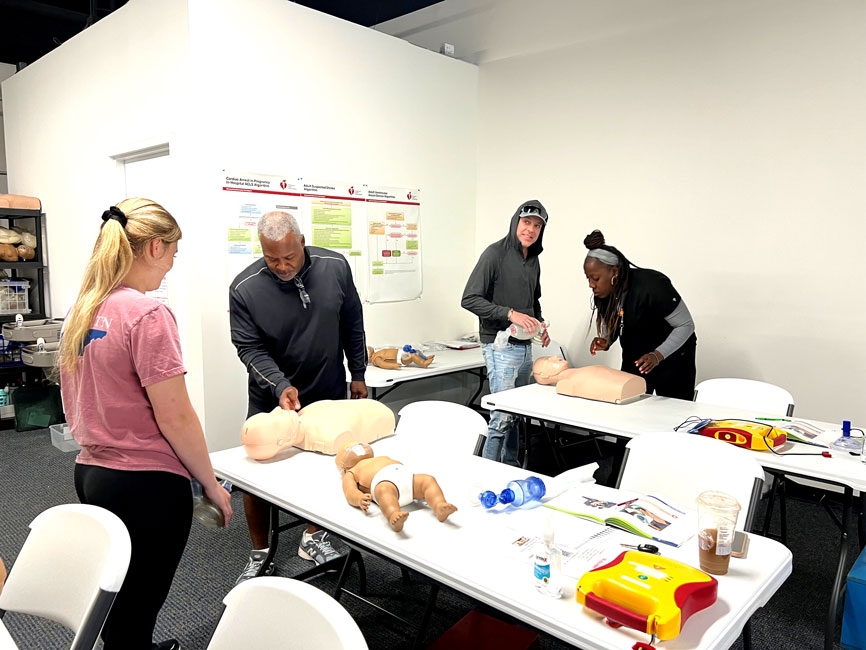
Proficiency in both adult and pediatric BLS requires scenario-based training on appropriately sized mannequins. The AHA BLS course includes both adult and pediatric skill stations evaluated by instructors. Key training elements include real-time feedback devices, high-fidelity mannequins, and structured debriefing.
Research published in Resuscitation found that CPR skill quality declines measurably within three to six months of training without reinforcement. Scheduled practice between certification cycles is strongly recommended. Competency is maintained through repetition, not attendance alone.
Common Mistakes and How to Avoid Them
Frequent mistakes in pediatric BLS include excessive ventilation force, incorrect compression depth, delayed ventilation, the wrong pulse check site, and improper head positioning in infants.
Common adult BLS errors include interrupted compressions, leaning on the chest between compressions, and delayed AED activation. Every minute without defibrillation in a shockable rhythm reduces survival by 7 to 10 percent. Awareness of these errors in training translates directly to better performance under pressure.
The Team Dynamic: Coordinating Multi-Rescuer Response
In a two-rescuer pediatric scenario, the 15:2 ratio requires precise coordination. One rescuer manages the airway while the other performs compressions. Closed-loop communication is essential — every instruction given by the team leader must be verbally confirmed by the receiving team member.
The two-thumb encircling technique replaces the two-finger method when two rescuers are present for infant resuscitation. This method produces superior compression depth and recoil. Role rotation every two minutes prevents fatigue-related quality decline in both adult and pediatric resuscitation.
Latest Guidelines and Updates
The AHA updates resuscitation guidelines every five years. Notable current recommendations include dispatcher-assisted CPR for bystanders, compression-only CPR for untrained adult bystanders, and updated guidance for opioid-associated cardiac arrest. Trained rescuers should still deliver ventilations, particularly in pediatric cases where respiratory failure is the primary cause of arrest.
Frequently Asked Questions
Q1: What is the biggest difference between pediatric and adult BLS protocols?
The most significant difference comes down to the root cause of the emergency. Adult BLS focuses on immediate chest compressions and early defibrillation, since cardiac emergencies are more common in adults. Pediatric BLS, on the other hand, prioritizes airway management and rescue breathing because pediatric emergencies typically originate from respiratory problems rather than cardiac issues.
Q2: Do compression ratios change when performing BLS on a child versus an adult?
Yes — and the number of rescuers matters. For a single rescuer, the protocol calls for 30 compressions followed by 2 rescue breaths for both adults and children. However, with 2 or more rescuers performing pediatric BLS, the ratio shifts to 15 compressions followed by 2 rescue breaths
Q3: At what age do you switch from pediatric to adult BLS protocols?
It’s not strictly age-based — it’s about physical development. Child BLS guidelines apply from approximately 1 year of age until puberty, defined for teaching purposes as breast development in females and the presence of axillary hair in males. For anyone showing signs of puberty and beyond, adult BLS guidelines should be followed. This distinction is important for healthcare providers who may encounter adolescent patients and need to make a quick protocol decision in the field.
Understanding the differences between pediatric and adult BLS protocols isn’t just an exam requirement — it’s the knowledge that can mean the difference between life and death in a real emergency. From compression depth and rescue breath techniques to compression ratios and the root causes of cardiac events, each protocol is tailored to the unique physiology of the patient in front of you. Whether you work in a hospital, a clinic, or a school, being fluent in both sets of guidelines makes you a more confident and capable responder.
Ready to Master BLS — and Pediatric Emergency Response — in Nashville?
Don’t leave your skills to chance. CPR Nashville is an American Heart Association training site offering hands-on, stress-free CPR and BLS certification in Nashville for healthcare providers and the general public. Whether you need initial certification or renewal, our expert instructors walk you through adult and pediatric protocols so you’re prepared for any situation.
Looking to go further with pediatric emergency care? Our PALS class in Nashville covers everything from recognizing pediatric respiratory distress to managing cardiac arrest in children and infants — all in a supportive, AHA-aligned environment. PALS certification in Nashville is ideal for nurses, physicians, paramedics, and other healthcare professionals who work with pediatric patients.
Register for a BLS or PALS class in Nashville today and leave with the confidence to act fast — no matter the patient’s age.